Your Cart


In rural Zambia, access to essential services like grain milling plays a critical role in food security, livelihoods, and economic resilience.
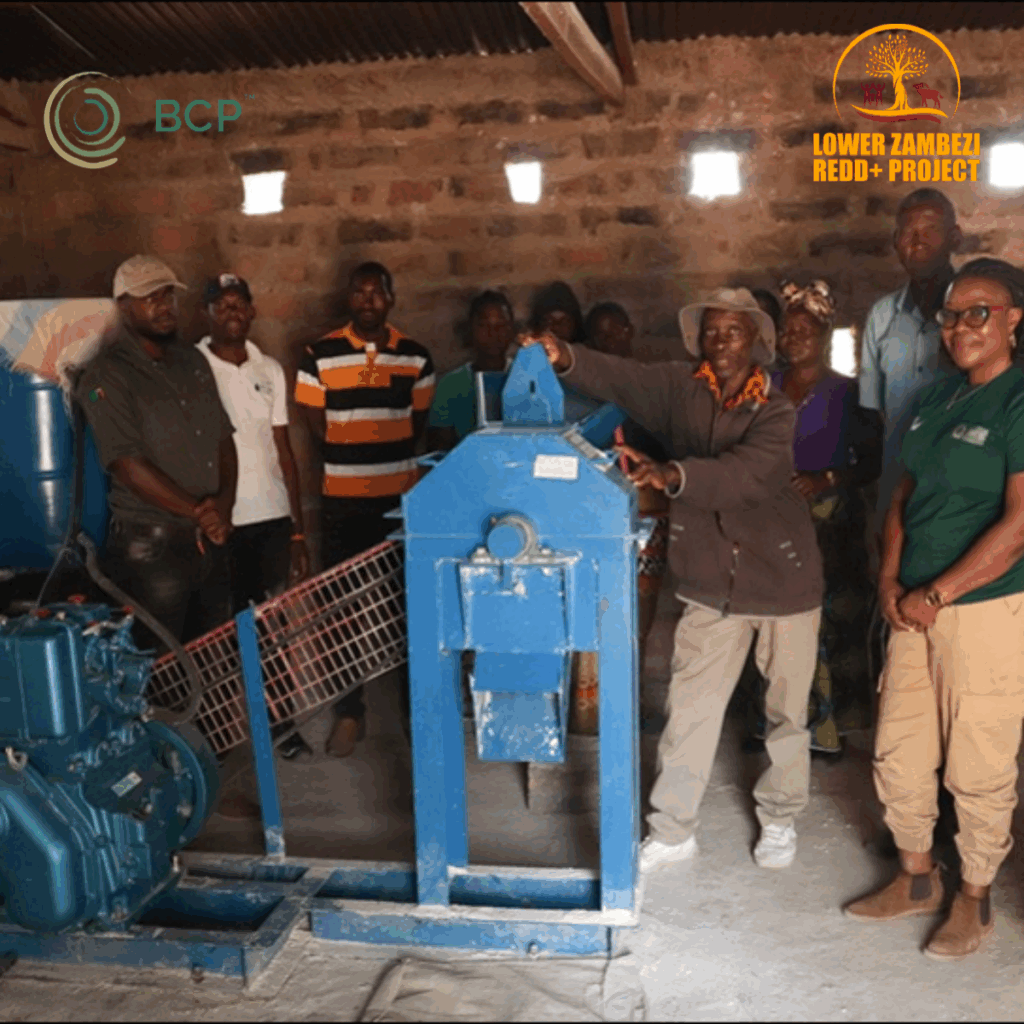
In Bunda Bunda Chiefdom, within the Lower Zambezi REDD+ Project, over 120 households previously travelled up to 6 kilometres to mill maize, a time-consuming and costly process.
Established in 2022, the Mutonka Hammer Mill is changing that reality by bringing affordable, local milling services closer to the community.
The introduction of the Mutonka Hammer Mill has significantly reduced both distance and cost.
This shift saves time, reduces physical strain, and allows households to allocate resources more efficiently.
Grain milling is an essential step in transforming maize into mealie meal, Zambia’s staple food.
Without access to affordable milling:
Reliable local milling services improve:
Small infrastructure investments like hammer mills have an outsized impact on daily life in rural communities.
The Mutonka Hammer Mill was funded through Forest Carbon Fees, generated by high-integrity REDD+ carbon projects.
This is a clear example of climate finance in Zambia being translated into practical, community-prioritised solutions.
Projects like this demonstrate how REDD+ projects support local development, ensuring that carbon revenues deliver tangible benefits beyond emissions reductions.
By bringing milling services into the community, the project:
This contributes to stronger, more self-reliant rural economies.
At BCP, our approach links forest conservation, climate finance, and community development.
When communities have access to essential services and sustainable income opportunities:
The Mutonka Hammer Mill is a practical example of how nature-based solutions can deliver both environmental and socio-economic impact.