Your Cart


Across the world, Indigenous Peoples and local communities are not only closest to nature, but they are also among its most effective stewards.

Indigenous Peoples and local communities manage vast areas of the world’s land, including critical forest ecosystems. Evidence from the World Resources Institute and FAO shows that where land rights are secure, deforestation rates are consistently lower and carbon stocks are better preserved. In many regions, these areas perform as well as, or better than, protected areas in preventing forest loss.
But this is not just about proximity. It is about rights, governance, and agency.
Climate change is experienced locally. Shifting rainfall patterns, declining soil fertility, and increasing pressure on natural resources are realities that communities face daily. This proximity gives Indigenous and rural communities a depth of knowledge that is both practical and adaptive, built over generations of living within these landscapes.
Yet proximity alone is not enough. Without secure land rights and the ability to make decisions, communities cannot effectively protect what they depend on.
Recognising this, approaches such as REDD+ are increasingly designed to move beyond participation toward true partnership, grounded in principles like Free, Prior and Informed Consent (FPIC). These frameworks ensure that communities are not only informed but have the authority to shape how conservation is implemented on their land.

A powerful example of this in practice can be seen in Zambia’s Kafue Zambezi Community Forest Project (KZCFP).
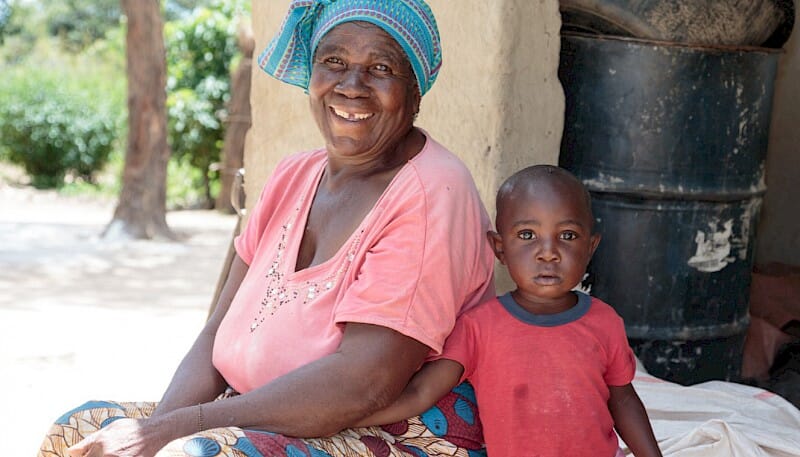
In the floodplains and forests of Western Zambia, the Lozi people of Barotseland have lived in close relationship with the land for generations. Their livelihoods, culture, and identity are deeply tied to the health of the Zambezi River system and surrounding ecosystems. The KZCFP builds on this foundation, placing communities at the centre of one of Africa’s most ambitious nature-based solutions.
At the heart of the project are Community Forest Management Groups (CFMGs), community-elected governance structures responsible for managing forest resources and overseeing the use of carbon revenues. These are not just symbolic committees; they are decision-making bodies entrusted with directing investments into infrastructure, livelihoods, and social services based on locally identified priorities.
This is where the link between rights and impact becomes tangible.
Through structured training and ongoing support, CFMGs are equipped to carry out needs assessments, financial management, and project planning, ensuring that climate finance translates into real outcomes on the ground. From education and healthcare to water access and livelihood development, these investments reflect what communities themselves identify as most important.
This model reinforces a critical principle: conservation is most effective when it is governed by those who live within it.
KZCFP also operates at a significant ecological scale. Spanning multiple districts and expanding across provinces, it aims to protect key forest catchments of the Zambezi and Kafue river systems, restore wildlife corridors within the Kavango Zambezi Transfrontier Conservation Area, and deliver large-scale emissions reductions through avoided deforestation.
But its true significance lies beyond scale.
It demonstrates how high-integrity climate finance, strong governance, and Indigenous knowledge can come together to create a system that works for both people and the planet.
Importantly, this is not done in isolation. The project is built on partnerships with government institutions, traditional authorities such as the Barotse Royal Establishment, and conservation organisations. This collaborative approach ensures alignment with national priorities, including Zambia’s development agenda and climate commitments.
Despite this progress, a broader global challenge remains.
Indigenous Peoples and local communities continue to receive a disproportionately small share of climate finance, despite managing some of the most critical ecosystems for climate stability. Bridging this gap is not just a matter of equity; it is a matter of effectiveness.
If climate solutions are to succeed at scale, they must recognise and secure land rights, invest in local governance systems, ensure equitable benefit sharing, and support community-led decision making. Evidence from the World Resources Institute and FAO shows that where land rights are secure, deforestation rates are consistently lower and carbon stocks are better preserved, with many community-managed forests performing as well as, or better than, formally protected areas. Because ultimately, forests are not saved by policy alone; they are protected by people.
KZCFP offers a clear example of what is possible when communities are not treated as beneficiaries but as partners, leaders, and custodians.

About Kafue Zambezi Community Forests Project
Anchored by Kafue National Park and working with Peace Parks Foundation, the project strengthens wildlife connectivity across the Kavango-Zambezi Transfrontier Conservation Area (KAZA TFCA), the world’s largest cross-border conservation landscape. Protecting key forests, floodplains, and waterways, it keeps major wildlife migration routes intact, including for elephants and other flagship species.
The project is currently based in the Kingdom of Barotseland, with planned expansion into North-Western, Copperbelt, Central, and Southern provinces of Zambia. The current total forest area protected is 1,738,564 hectares, with 859,924 hectares currently under development for inclusion.
The KZCFP is one of the world’s largest and most ambitious nature-based climate initiatives. It aims to reduce roughly 1 million tonnes of carbon emissions per year through forest protection and restoration. The project is community-led, with formal governance structures ensuring fair benefit sharing. It combines Indigenous knowledge, satellite monitoring, and phased implementation to protect biodiversity, secure water resources, build climate resilience, and support hundreds of local communities. By scale and ambition, it is positioned to become the world’s largest REDD+ project, with tangible benefits for both people and ecosystems.
The project has secured two multi-year credit purchase agreements with major international companies. The project is preparing for its first Verification in October 2026. Work will continue on securing forest carbon rights for 26 additional communities, while strengthening community ownership and long-term benefits. Strategic Environmental Assessment consultations will begin in planned expansion areas, alongside continued development of new forest areas for inclusion to expand conservation and carbon activities across the wider landscape.
Operated in partnership with Peace Parks Foundation and BCP, find out more about KZCFP here.