Your Cart


Every year, uncontrolled late-season fires threaten millions of hectares of forest across southern Africa. These intense fires can destroy wildlife habitat, release significant amounts of stored carbon into the atmosphere, and put community livelihoods at risk.
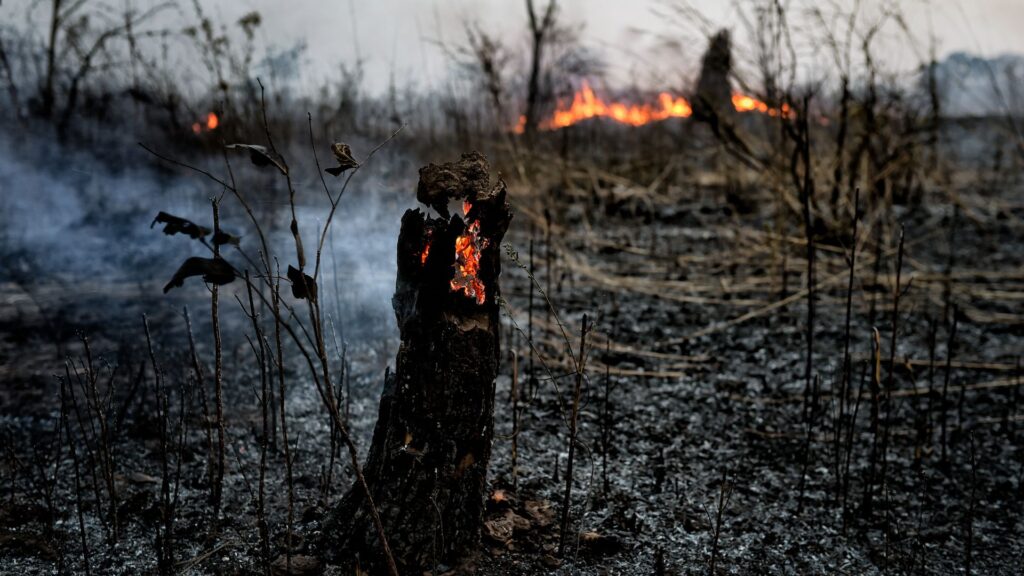
At BCP (BioCarbon Partners), fire management is not simply about responding to wildfires once they occur. It is a proactive, community-led conservation strategy designed to reduce risk before destructive fires take hold.
At the core of this approach are Fire Management Working Groups, established in each Chiefdom and comprising the Forestry Department (FD), the Department of National Parks and Wildlife (DNPW), and community representatives through Community Resource Boards (CRBs) and Community Forest Management Groups (CFMGs). These groups are responsible for developing fire management plans, coordinating activities, and selecting and training community fire marshals.
Training equips fire marshals with practical skills to safely manage fires and reduce their impact on both ecosystems and people. BCP supports this work by providing essential equipment, including drip torches, fire beaters, and personal protective equipment, ensuring that local teams can operate effectively and safely.
Using historical fire hotspot data, targeted burn areas are identified and planned. Early burning is then carried out between June and August, when vegetation is still relatively moist, and fires are naturally cooler, slower, and easier to control.
Fire marshals are deployed in teams, typically around 50 individuals per chiefdom, to conduct controlled, patchy burns across approximately 25 to 30 percent of community forest areas. These burns are carefully managed using natural and human-made firebreaks such as rivers, streams, and roads.
The result is a mosaic of burnt and unburnt areas, which significantly reduces the spread and intensity of destructive late-season fires. In many cases, the cooler temperatures and overnight dew naturally extinguish the early burns, further limiting risk.
The work does not stop once early burning is complete. Fire marshals remain active throughout the fire season, responding to and reporting any late-season fires that may occur.
This proactive approach delivers multiple benefits:
As climate change increases the frequency and severity of wildfires around the world, effective fire management is becoming an increasingly important part of nature-based climate solutions. By combining local knowledge with structured planning, government collaboration, and targeted support, communities are helping protect forests before the flames become a crisis.
Related Articles